eBay SEO - How to Write Titles and Descriptions That Rank
Learn how eBay's search engine ranks listings and how to write titles and descriptions that get found, clicked, and bought.
July 8, 2026
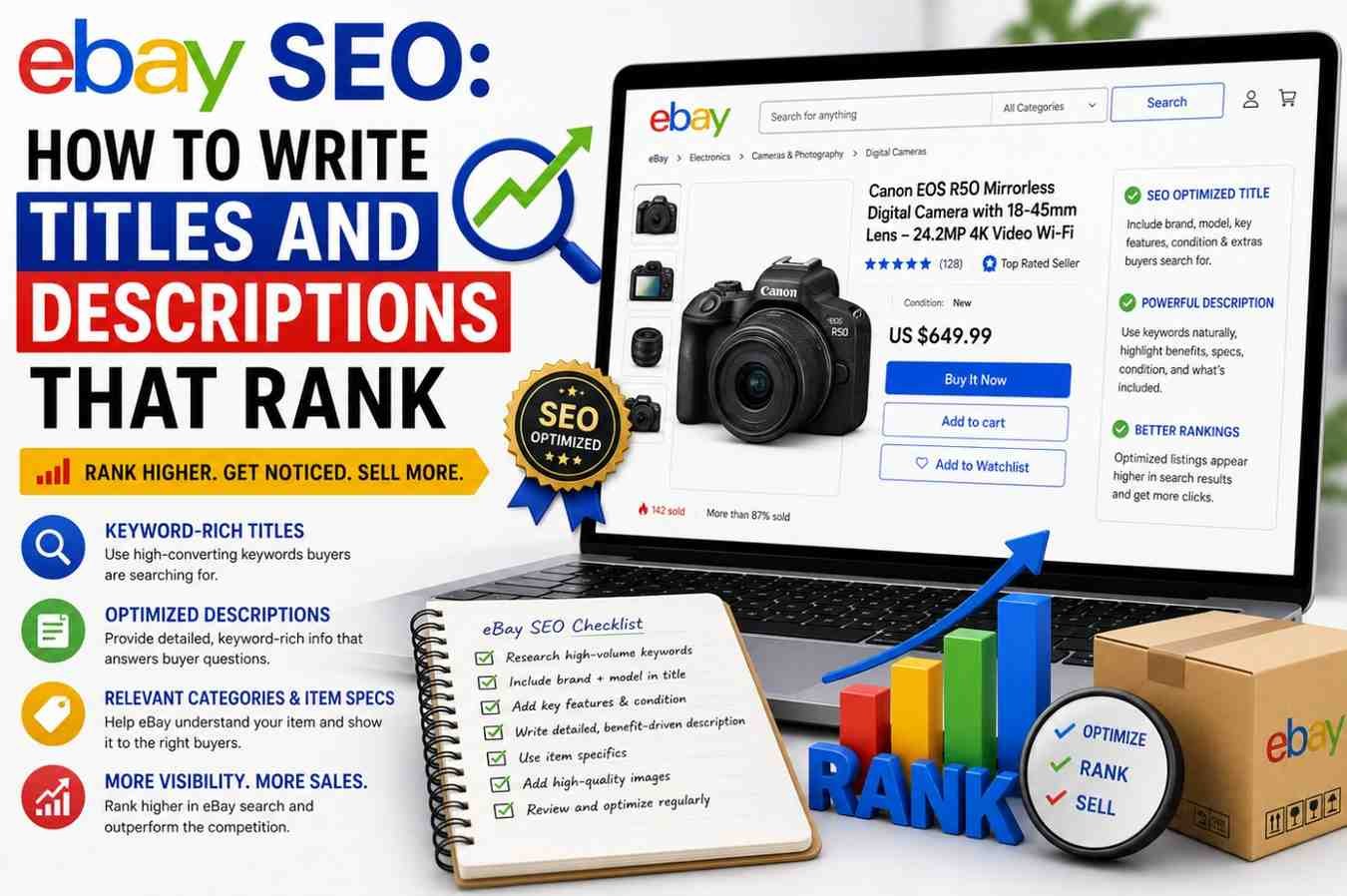
eBay isn't just a marketplace. It's a search engine with its own rules, and if your listing isn't built for those rules, it stays buried on page four while a nearly identical item outsells you.
Good eBay listing SEO comes down to two things: a title that matches what buyers actually type, and a description that keeps them reading once they click. Get both right and eBay's search engine starts working for you instead of against you.
How eBay's Search Engine Actually Works
eBay uses an algorithm called Cassini to decide which listings show up first. It doesn't just match keywords, it also looks at your seller performance, listing quality, price competitiveness, and how buyers behave once they land on your page.
That means SEO on eBay isn't a one-time fix. It's an ongoing relationship between your title, your description, and how well your listing actually performs. If you want the full breakdown, we've covered how eBay's Best Match algorithm ranks listings in detail.
Writing eBay Titles That Rank
Your title is the single most important SEO field on eBay. You get 80 characters, and every one of them should earn its place.
Start With the Keyword Buyers Actually Search
Skip vague, branded language and lead with what a buyer would type into the search bar. "Vintage Leather Crossbody Bag" beats "Beautiful Handmade Purse" almost every time, because it matches real search behavior.
Not sure what buyers are actually searching for? Rankivo's keyword research tool can show you real search volume before you commit to a title.
Front-Load the Important Words
eBay's search weighs the first few words of your title more heavily. Put your primary keyword, brand, and key attribute (size, color, material) as close to the front as possible.
👉 Lead with the item type, not the brand story
👉 Include size, color, or material if it's a common search filter
👉 Use every character available, don't leave space on the table
Curious exactly how many characters you should be using and why? We break it down in how many characters an eBay title should be.
Avoid Keyword Stuffing
eBay does penalize titles that read like a list of unrelated keywords crammed together. A title should still read like something a human wrote.
✅ "Men's Waterproof Hiking Boots Size 10 Brown Leather"
❌ "Boots Hiking Waterproof Men Shoes Outdoor Leather Brown Size10 Sale"
Writing Descriptions That Convert and Rank
Your description doesn't carry as much ranking weight as your title, but it still matters, and it's where you actually close the sale.
Open With the Keyword Again
Repeat your primary keyword naturally in the first sentence or two. This reinforces relevance and confirms to the buyer they're in the right place.
Answer Buyer Questions Before They're Asked
Condition, measurements, compatibility, and shipping timelines belong near the top. Buyers who have to dig for basic details usually just leave.
👉 List exact measurements and condition upfront
👉 Mention compatibility or fit clearly if relevant
👉 Use short paragraphs and bullet points, not a wall of text
Use Long-Tail Detail to Capture More Searches
Your description is a good place to naturally include longer, more specific phrases that wouldn't fit in your title. This helps you show up for searches you'd otherwise miss. If you're new to this concept, our guide on long-tail keywords and why beginners need them is a good starting point.
Common eBay SEO Mistakes to Avoid
❌ Copying the manufacturer's description word for word
❌ Leaving item specifics fields blank or incomplete
❌ Using the same generic title across dozens of different items
✅ Writing a unique title and description for every listing
✅ Updating listings that haven't sold instead of letting them sit stale
Solid e-commerce product SEO practices apply across every marketplace, and eBay is no exception, small, consistent improvements to titles and descriptions compound over time.
📚 This Article Is Part of Our E-commerce Product SEO Series
Pillar: E-commerce Product SEO for Beginners: The Complete 2026 Guide
How to Write a Product Description That Sells (With Examples)
eBay SEO: How to Write Titles and Descriptions That Rank ← You are here
Product Title SEO: How to Write Titles That Rank and Convert
Explore the full series to go deeper on any topic.
FAQ
How often should I update my eBay listing titles?
Revisit titles for items that haven't sold in 30 to 60 days. Small changes based on new keyword data can meaningfully improve visibility.
Does eBay SEO work the same way as Google SEO?
Not exactly. eBay's Cassini algorithm cares more about seller performance and buyer behavior on the platform itself, but the core idea, matching real search intent, is the same.
Should I use all 80 characters in my eBay title?
In most cases, yes. Unused characters are unused ranking opportunity, as long as the title still reads naturally.
Writing unique, high-converting listings for dozens of eBay products takes time you probably don't have. Let Rankivo's writers handle it for you.
Ready to create content like this?
Use RANKIVO to generate SEO-optimized content in seconds. Start free today.
Start Free — No Credit Card