Long-Tail Keywords - What They Are and Why Beginners Need Them
Learn what long-tail keywords are and why they are the smartest starting point for beginners who want real organic traffic without competing against giants.
Sarah Malik
Content & Keyword Expert · June 4, 2026
If you are new to SEO, you have probably been tempted to go after big keywords. Terms like "SEO tips" or "make money online" look attractive because they get thousands of searches every month.
Here is the problem: so does every other website on the internet. And most of them have been around for years, have thousands of backlinks, and have teams of writers producing content full time.
You are not going to outrank them. Not yet.
Long-tail keywords are how beginners actually get traffic — and this guide will show you exactly why they work and how to start using them.
What Are Long-Tail Keywords?
Long-tail keywords are longer, more specific search phrases. They usually contain three or more words and target a narrower topic.
Instead of "keyword research," a long-tail version might be:
👉 "how to do keyword research for a new blog"
👉 "best free keyword research tools for beginners"
👉 "keyword research tips for small websites"
These phrases get fewer searches individually. But they are much easier to rank for, they attract more relevant visitors, and they tend to convert better because the searcher knows exactly what they want.
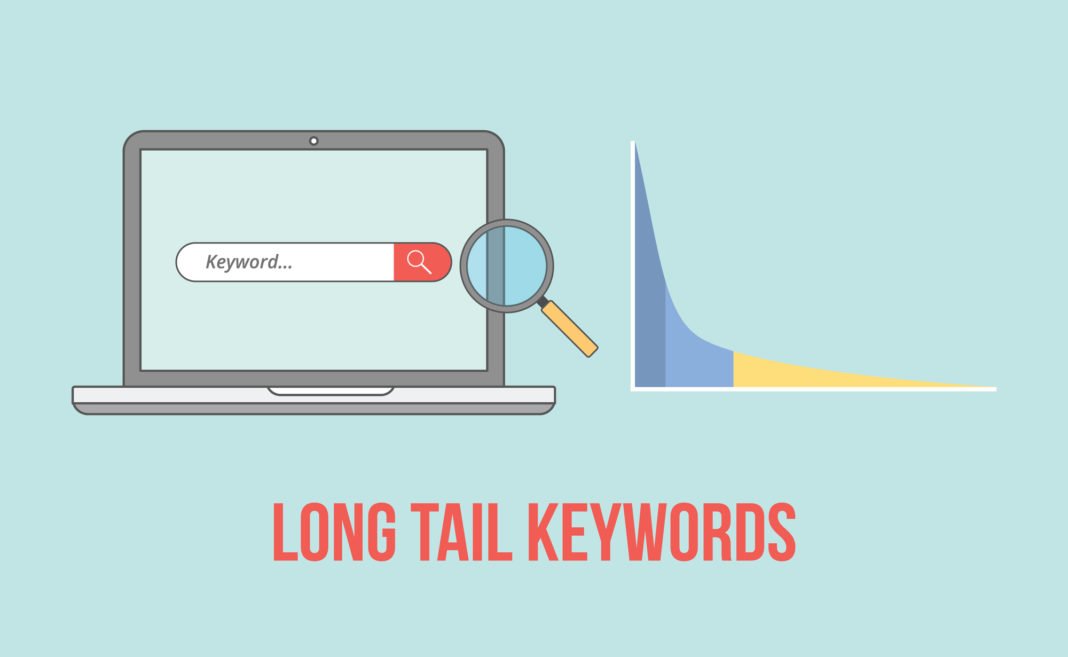
The name "long-tail" comes from a concept in marketing — when you graph search volume across all keywords, the most popular terms sit at the top, and a long tail stretches out to the right with thousands of specific, lower-volume terms. That tail contains enormous opportunity.
Why Long-Tail Keywords Work for Beginners
New websites have almost no domain authority. They have not built trust with Google yet. Going after high-competition, high-volume keywords is like a new restaurant trying to compete for "best restaurant in New York" on their first week open.
Long-tail keywords level the playing field. Here is why they work:
✅ Lower competition. Fewer websites are targeting specific phrases. You are not fighting thousands of established sites — you are competing against a much smaller pool, often with content that is older or less focused than yours.
✅ Higher relevance. Someone searching "long tail keywords for beginners SEO blog" knows exactly what they want. Your content can answer that precisely. Google rewards relevance, and visitors who find exactly what they searched for stay longer and engage more.
✅ Faster results. A new site targeting long-tail keywords can see rankings within weeks rather than months. That early traction builds momentum — both in terms of traffic and how Google views your site's authority.
✅ They add up. One long-tail keyword might bring 50 visitors a month. But 20 articles targeting 20 different long-tail keywords can bring 1,000 visitors a month — without you ever competing for a high-volume term.
Long-Tail vs. Short-Tail: The Real Difference
Short-tail keywords are broad, usually one or two words:
❌ "SEO"
❌ "keywords"
❌ "blogging"
Long-tail keywords are specific, usually three or more words:
✅ "how to do SEO for a new website"
✅ "how to find keywords for a blog"
✅ "blogging tips for beginners 2026"
Short-tail keywords have massive search volume and brutal competition. Long-tail keywords have modest volume and realistic competition. For a beginner, the choice should be obvious.
That said, your long-term strategy should include both. As your site grows and earns authority, you can start targeting more competitive terms. But in the early stages, long-tail keywords are your fastest path to real traffic.
How to Find Long-Tail Keywords
The good news is that long-tail keywords are everywhere — you just need to know where to look.
👉 Google's autocomplete. Start typing a keyword into Google and watch the suggestions. Each one is a real search people are making. Those suggestions are a goldmine of long-tail ideas. (Check out how to use Google Autocomplete for keyword research)
👉 People Also Ask boxes. Scroll down any Google results page and you will find a "People Also Ask" section. Every question there is a potential long-tail keyword.
👉 Related searches. At the bottom of Google's results page, you will find related search suggestions. These are similar queries your audience is searching alongside the main term.
👉 A dedicated keyword tool. Manual methods work, but they are slow. Rankivo's keyword research tool lets you enter a seed keyword and instantly pulls long-tail variations sorted by search volume, keyword difficulty, and search intent. You can filter for low-competition terms in seconds — no spreadsheet juggling required.
Once you have a list of long-tail keywords, group similar ones together. Often you can target two or three related long-tail phrases in a single article, which compounds your traffic potential per piece of content.
How to Use Long-Tail Keywords in Your Content
Finding the keywords is only half the job. You also need to use them well.
A few practical rules:
✅ Put your primary long-tail keyword in your title, first paragraph, and at least one subheading
✅ Use secondary variations naturally throughout the body — do not force them
❌ Write for the reader first. If the keyword placement sounds awkward, rewrite the sentence
✅ Match your content type to the intent behind the keyword (a how-to keyword needs a how-to article, not a product page)
The goal is content that reads naturally while being clearly relevant to the search query. Stuffing keywords in every paragraph hurts more than it helps.
A Simple Starting Strategy
If you are just getting started with a new blog or website, here is a straightforward approach:
👉 Pick a main topic for your site
👉 Use a keyword tool to find 20-30 long-tail keywords in that topic with low competition
👉 Write one focused article per keyword
👉 Link the articles together where topics are related
👉 Repeat as you publish more content
This is essentially how content clusters work — and it is one of the most reliable ways to build organic traffic from scratch. You can learn more about the broader approach in our guide on keyword research for beginners.
Conclusion
Long-tail keywords are not a consolation prize for beginners who cannot rank for big terms. They are a deliberate strategy that drives real, targeted traffic — often faster and more reliably than chasing volume.
Start specific. Build authority. Expand your keyword targets as your site grows.
Want to find the right long-tail keywords for your content? Rankivo's keyword research tool makes it fast and straightforward. Start free at rankivo.co.
This Article Is Part of Our Keyword Research Series
📚 Explore the full Keyword Research Series
Start here:
Pillar article:
👉 How to Do Keyword Research for Beginners (2026 Guide)
Supporting cluster articles:
Long-Tail Keywords: What They Are and Why Beginners Need Them ← You are here
Sub-cluster articles under this topic:
→ How to Find Long-Tail Keywords for Free (Step-by-Step)
→ Why Long-Tail Keywords Convert Better Than Short-Tail
Explore the full series to go deeper on any topic.
FAQ
Q1: What is a long-tail keyword?
A long-tail keyword is a specific search phrase, usually three or more words, that targets a narrow topic. For example, "how to find long-tail keywords for a new blog" is a long-tail version of the broader term "keyword research." Long-tail keywords get fewer searches but are much easier to rank for.
Q2: Why should beginners focus on long-tail keywords?
New websites have little domain authority and no established trust with Google. Long-tail keywords have lower competition, which gives newer sites a realistic chance of ranking. They also attract highly specific visitors who are more likely to engage with your content or take action.
Q3: How many long-tail keywords should I target per article?
Usually one primary long-tail keyword and two to three related secondary phrases per article. Do not try to cram too many into one piece — it dilutes focus and makes the content harder to read.
Q4: Do long-tail keywords still work in 2026?
Yes. While search trends evolve, the fundamental advantage of long-tail keywords — lower competition and higher specificity — has not changed. If anything, Google's increasing ability to understand search context makes well-targeted long-tail content more valuable, not less.
Q5: What is the difference between long-tail and low-competition keywords?
They often overlap but are not the same thing. Long-tail refers to the length and specificity of a keyword. Low-competition refers to how hard it is to rank for. Many long-tail keywords are low competition, but not all. Always check the keyword difficulty score before committing to a target.
Written by
Sarah Malik
Content & Keyword Expert
Sarah blends data-driven keyword research with compelling storytelling. She helps SaaS brands build topical authority through content that ranks and converts.
Ready to create content like this?
Use RANKIVO to generate SEO-optimized content in seconds. Start free today.
Start Free — No Credit Card