Why Long-Tail Keywords Convert Better Than Short-Tail
Discover why long-tail keywords drive higher conversions than short-tail terms. Learn how search specificity translates into more clicks, leads, and sales.
June 5, 2026
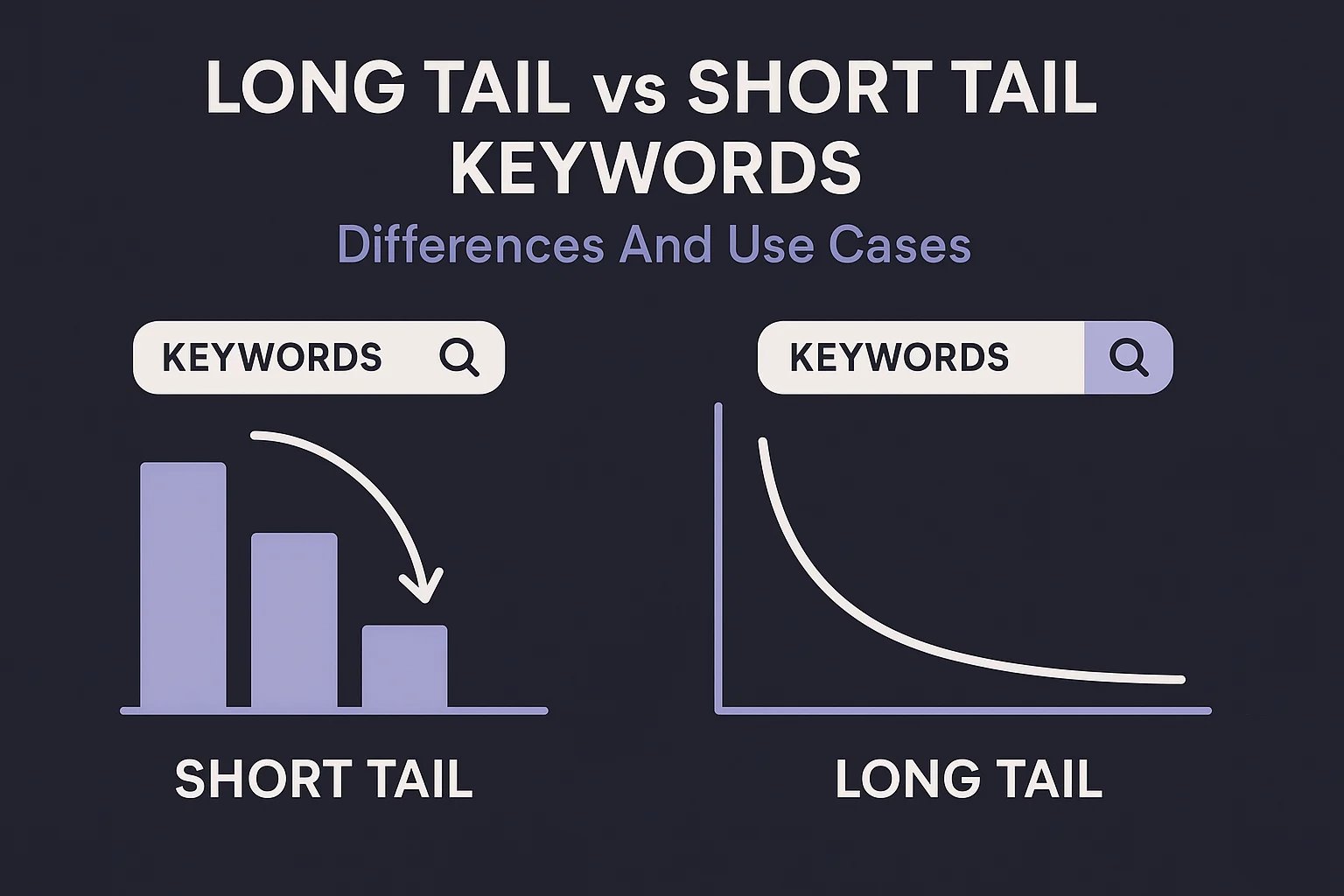
More traffic is not always better traffic. A keyword that brings 10,000 visitors a month means nothing if none of them take action.
This is where long-tail keywords have a clear edge over short-tail terms — and why smart content creators prioritize them not just for rankings, but for results.
The Core Reason: Specificity Signals Intent
When someone types "shoes" into Google, you have no idea what they want. Are they researching shoe history? Looking for a local store? Wanting to buy running shoes online?
That ambiguity makes "shoes" nearly useless from a conversion standpoint.
Now compare that to "buy lightweight running shoes for flat feet." That searcher knows exactly what they want. They have already done their research, narrowed their options, and are ready to make a decision.
The more specific the keyword, the clearer the intent — and the closer the searcher is to taking action. That is the fundamental reason long-tail keywords convert better.
They Attract Buyers, Not Browsers
Short-tail keywords draw people at the very beginning of their journey. They are curious, exploring, not committed. Getting their attention is easy. Getting them to convert is hard.
Long-tail keywords attract people further along in their decision-making. They have moved past general curiosity and are looking for something specific — a solution, a product, a service, an answer.
Think about your own search behavior. When you are seriously ready to buy something, your searches get more specific. You stop searching "laptops" and start searching "best lightweight laptop under $1000 for college students." That specificity is a signal of intent — and intent drives conversions.
Lower Competition Means More Qualified Clicks
Short-tail keywords are dominated by huge websites with massive authority. Even if you rank on page one for a broad term, you are competing with well-known brands for clicks.
Long-tail keywords face far less competition. A smaller site can realistically rank in the top three positions — and when you do, the clicks you get are from people who searched for exactly what you offer.
A page ranking #1 for a precise long-tail keyword will almost always outconvert a page ranking #5 for a high-volume short-tail term. The visitor landed because your content matched their exact search. That alignment is what drives action.
Real Example: Short-Tail vs Long-Tail Conversion
Imagine two blog posts:
Post A targets "keyword research" — 40,000 monthly searches, extremely competitive, attracts everyone from students to enterprise marketers.
Post B targets "best free keyword research tool for new bloggers" — 400 monthly searches, low competition, attracts people who are specifically looking for a free tool and are ready to try one.
Post A might get 500 visitors a month if it manages to rank. Post B might get 200. But Post B's visitors are far more likely to click through to a tool, sign up, or take the next step — because the content matches exactly what they came for.
Over time, 20 posts like Post B outperform one post like Post A — in conversions, not just traffic.
How to Find Long-Tail Keywords That Convert
Not all long-tail keywords convert equally. The ones that convert best tend to have one of these characteristics:
👉 Commercial intent — the searcher is comparing options ("best", "top", "vs", "review")
👉 Transactional intent — the searcher is ready to act ("buy", "sign up", "try", "get")
👉 Problem-specific — the searcher has a precise pain point ("keyword research tool for small website with no budget")
When you are building your keyword list, filter for these intent signals. A keyword tool makes this much faster. Rankivo's (keyword research tool) shows intent signals alongside each keyword so you can prioritize terms that are likely to drive action — not just traffic.
The Compounding Effect
Here is something most beginners miss: long-tail keyword content compounds over time.
Each article you publish targeting a specific long-tail keyword adds another entry point to your site. Visitors who arrive through one article discover others. Internal links guide them deeper into your content. Trust builds. Conversions follow.
Short-tail content can bring big spikes of traffic. Long-tail content builds a steady, growing stream of qualified visitors — the kind who actually do something when they land on your page.
For a solid foundation on how to approach this strategically, read our guide on long-tail keywords for beginners and the full keyword research for beginners guide.
Conclusion
Long-tail keywords convert better because they attract people who already know what they want. The specificity of the search reflects the clarity of the intent — and clear intent leads to action.
If you are choosing between chasing volume and chasing conversions, chase conversions. Build content around specific, intent-driven long-tail keywords and your results will speak for themselves.
Find long-tail keywords worth targeting at rankivo.co — free to get started.
This Article Is Part of Our Keyword Research Series
📚 Explore the full Keyword Research Series
Start here:
Pillar article:
👉 How to Do Keyword Research for Beginners (2026 Guide)
Parent cluster article:
👉 Long-Tail Keywords: What They Are and Why Beginners Need Them
Other articles in this sub-cluster:
👉 How to Find Long-Tail Keywords for Free (Step-by-Step)
👉 Why Long-Tail Keywords Convert Better Than Short-Tail ← You are here
Explore the full series to go deeper on any topic.
FAQ
Q1: Do long-tail keywords always convert better than short-tail?
Generally yes — but it depends on the intent behind the keyword. A long-tail keyword with informational intent ("what is a long-tail keyword") will not convert as well as a short-tail keyword with strong transactional intent. The key factor is intent, not just length. Long-tail keywords just tend to carry clearer intent more often.
Q2: What conversion rate can I expect from long-tail keywords?
It varies by niche and offer, but long-tail keyword pages typically see 2-5x higher conversion rates than broad keyword pages. The traffic volume is lower, but the quality is significantly higher.
Q3: Should I ignore short-tail keywords completely?
No. Short-tail keywords are valuable for brand awareness and reaching people early in their journey. The smart approach is to use long-tail keywords to drive conversions now, while building authority over time to eventually compete for broader terms.
Q4: How specific does a long-tail keyword need to be to convert well?
Specific enough that the searcher's intent is clear. If the keyword could apply to five different types of people with five different goals, it is probably too broad. If it describes one specific problem or need, it is in the right range.
Q5: Can one piece of content target multiple long-tail keywords?
Yes — and it should. Write your article around one primary long-tail keyword, then weave in two or three closely related variations naturally. This expands the number of searches your content can appear for without diluting the focus of the piece.
Ready to create content like this?
Use RANKIVO to generate SEO-optimized content in seconds. Start free today.
Start Free — No Credit Card