What Is Keyword Difficulty and How to Use It?
Keyword difficulty tells you how hard it is to rank for a keyword. Learn what the score means and how to use it to find keywords you can actually win.
Alex Carter
SEO Strategist · June 2, 2026
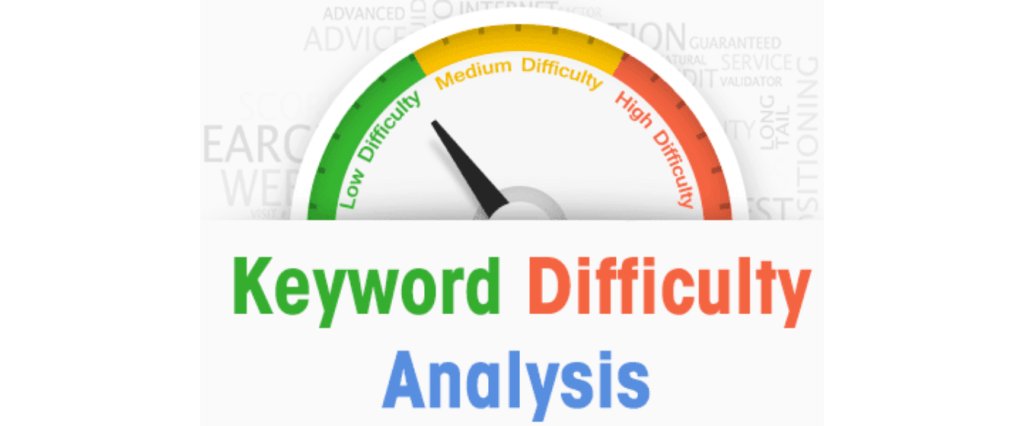
You found a keyword with solid search volume. Great. But before you spend hours writing an article around it, there is one more thing you need to check: keyword difficulty.
This single score can save you weeks of wasted effort — or help you find a keyword you can actually rank for right now.
What Is Keyword Difficulty?
Keyword difficulty (often shown as KD) is a score that tells you how hard it would be to rank on the first page of Google for a given keyword.
Most tools express it as a number from 0 to 100. The higher the number, the harder it is to rank.
Here is a rough breakdown:
- 0–20 — Low difficulty. New or small sites can compete.
- 21–49 — Moderate. You need some authority and good content.
- 50–69 — Hard. Established sites with backlinks tend to dominate here.
- 70–100 — Very hard. Usually controlled by major brands or high-authority domains.
These ranges are not universal — different tools calculate the score differently. But the direction is always the same: lower is easier.
How Is Keyword Difficulty Calculated?
The score is mostly based on the strength of the pages already ranking for that keyword. Specifically, tools look at:
- The domain authority of top-ranking pages
- The number and quality of backlinks pointing to those pages
- How well the top results match the search intent
If the first page is full of well-established sites with thousands of backlinks, a new blog post has little chance of breaking in — no matter how good it is.
That is what a high KD score is telling you.
Why Beginners Often Ignore It (And Regret It)
A common mistake is chasing keywords based on search volume alone. You see a keyword getting 10,000 searches a month and think — I want that traffic.
But if the KD is 78, the top results are dominated by sites with years of content and thousands of backlinks. Your post will likely sit on page 5 or 6, getting almost zero clicks.
For a new site, that is not a strategy. That is wishful thinking.
Keyword difficulty helps you focus on keywords you can realistically win, especially when your site is still building authority.
How to Use Keyword Difficulty the Right Way
Step 1: Filter by difficulty first, then check volume.
When doing keyword research, do not start with volume. Start by setting a maximum difficulty threshold — somewhere around 20–30 for a newer site. Then look at what volume those keywords get.
You will be surprised how many low-difficulty keywords still get a few hundred searches a month. That adds up fast across multiple articles.
Step 2: Look at the actual search results.
KD scores are estimates. Always open an incognito window and search the keyword yourself. If you see Reddit threads, forum posts, or thin content on page one — that is a real opportunity, regardless of what the score says.
Step 3: Build toward harder keywords over time.
Start with low-KD keywords to build topical authority and earn backlinks naturally. As your site grows, you can go after mid-difficulty keywords and eventually compete for the harder ones.
It is a progression, not a one-time decision.
How Rankivo Shows Keyword Difficulty
When you use Rankivo's keyword research tool, every keyword result comes with a difficulty score alongside search volume and search intent. You do not have to cross-reference multiple tabs or guess.
You can sort and filter by difficulty instantly, which makes it easy to build a list of realistic targets — especially if you are working on a newer site without much domain authority yet.
One Number That Changes How You Build Content
Keyword difficulty is not just a metric to glance at. It is a filter that shapes your entire content strategy.
Use it to stop wasting time on unwinnable keywords. Use it to find the gaps where you actually have a chance. And use it to plan a progression that grows your site's authority month by month.
If you are still learning the fundamentals, start with this guide to keyword research for beginners — it covers how difficulty fits into the full research process.
Ready to start finding low-competition keywords? Try Rankivo's keyword research tool at rankivo.co — it is free to get started.
This Article Is Part of Our Keyword Research Series
📚 Explore the full Keyword Research Series
Pillar article:
👉 How to Do Keyword Research for Beginners (2026 Guide)
Parent cluster article:
👉 How to Find Low Competition Keywords (Step-by-Step)
Sub-cluster articles in this section:
→ What Is Keyword Difficulty and How to Use It ← You are here
→ How to Find Low Competition Keywords for a New Website
These guides are part of our complete keyword research series to help you learn step by step.
FAQ
What is a good keyword difficulty score for beginners?
Aim for keywords with a KD score of 0–30 when starting out. These give you the best chance of ranking without needing significant domain authority or backlinks.
Is keyword difficulty the same across all SEO tools?
No. Each tool uses its own formula. The score from one platform may differ from another. Use it as a directional guide, not an absolute rule — and always check the actual search results.
Can I rank for a high-difficulty keyword with great content?
Content quality helps, but it is not enough on its own for high-KD keywords. Those rankings are usually held by sites with strong backlink profiles. Focus on lower-difficulty keywords first to build authority, then work your way up.
Does keyword difficulty change over time?
Yes. As more sites target a keyword and earn links, the difficulty can increase. That is why acting on low-competition keywords early — before they get crowded — gives you a real advantage.
Written by
Alex Carter
SEO Strategist
Alex has spent 8+ years helping brands dominate search rankings. Specializes in technical SEO, keyword strategy, and content systems that drive compounding organic traffic.
Ready to create content like this?
Use RANKIVO to generate SEO-optimized content in seconds. Start free today.
Start Free — No Credit Card