4 Types of Search Intent Explained With Examples
Learn the 4 types of search intent with clear examples. Understand what searchers actually want so your content ranks and drives real traffic.
Sarah Malik
Content & Keyword Expert · June 4, 2026
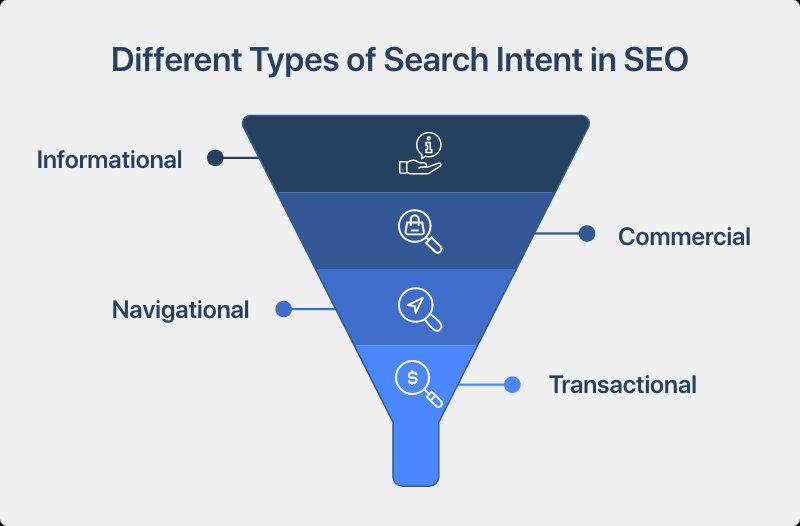
Search intent is the reason behind a search query. It is what the person actually wants when they type something into Google.
If your content does not match that reason, it will not rank — even if your keyword placement is perfect. Google is very good at figuring out what searchers want, and it rewards content that delivers exactly that.
There are four types of search intent. Once you understand them, keyword research for beginners becomes a lot more strategic.
1. Informational Intent
The searcher wants to learn something. They are not ready to buy. They just want an answer.
Examples:
👉 "how does SEO work"
👉 "what is a backlink"
👉 "why is my website not ranking"
Content that works here:
✅ blog posts
✅ how-to guides
✅ explainers
✅ tutorials
This is where most beginners start their content strategy. Informational content builds trust and brings in organic traffic early. The goal is not to sell immediately — it is to be the most helpful result on the page.
2. Navigational Intent
The searcher already knows where they want to go. They are using Google as a shortcut.
Examples:
👉 "Google Search Console login"
👉 "Rankivo keyword tool"
👉 "YouTube Studio"
Content that works here:
✅ your homepage
✅ your tool pages
✅ your brand pages
You cannot really compete for navigational keywords that belong to other brands. But you absolutely want to own your own navigational queries — make sure your key pages are indexed and ranking for your brand name.
3. Commercial Intent
The searcher is researching before they decide. They want to compare options, read reviews, or figure out what is best for their situation.
Examples:
👉 "best keyword research tools for beginners"
👉 "free vs paid SEO tools"
👉 "keyword tool comparison 2026"
Content that works here:
✅ comparison articles
✅ listicles
✅ review posts
✅ "best of" guides
This type of intent sits between informational and transactional. The person is close to making a decision — they just need the right information to get there. This is a high-value spot for content because readers are engaged and motivated.
When you are doing keyword research, look for commercial intent keywords in your niche. They often convert better than pure informational keywords, and they are easier to rank for than transactional ones.
Rankivo's keyword research tool shows search intent signals alongside each keyword — so you can quickly see whether a keyword is informational, commercial, or transactional without guessing.
4. Transactional Intent
The searcher is ready to take action. They want to buy, sign up, download, or do something specific right now.
Examples:
👉 "buy keyword research tool"
👉 "sign up for SEO platform"
👉 "download free SEO checklist"
Content that works here:
✅ product pages
✅ pricing pages
✅ landing pages
✅ free trial offers
These keywords have the highest conversion potential. The search volume is usually lower than informational keywords, but the people searching are much further along in their decision-making.
If you are running a blog or content site, transactional keywords should point to your product or affiliate pages — not blog posts.
How to Use This in Practice
For every keyword you target, ask: what does the person actually want right now?
Then match your content type to that answer. A how-to article will not rank for a transactional keyword. A product page will not rank for an informational one. Google knows the difference, and so should you.
A good approach when you are building out a content strategy:
✅ Use informational keywords for blog content that builds trust
✅ Use commercial keywords for comparison and review posts
✅ Use transactional keywords for landing pages and offers
Understanding the types of search intent also makes you better at keyword research for beginners — because it helps you filter out keywords your content cannot realistically compete for, and focus on the ones that match what you are actually publishing.
Conclusion
Search intent is not a bonus consideration. It is a core part of ranking. If you pick the right keyword but create the wrong type of content for it, you will not rank — and even if you do, your bounce rate will tell Google to push you back down.
Learn to read intent before you write a single word. It will save you a lot of time and wasted effort.
Ready to find keywords with clear intent signals? Rankivo's keyword research tool helps you identify what searchers want before you commit to a topic. Start free at rankivo.co.
This Article Is Part of Our Keyword Research Series
📚 Explore the full Keyword Research Series
Start here:
Pillar article:
👉 How to Do Keyword Research for Beginners (2026 Guide)
Parent cluster article:
👉 What Is Search Intent and Why It Determines Your Rankings
Other articles in this sub-cluster:
👉 4 Types of Search Intent Explained With Examples ← You are here
Explore the full series to go deeper on any topic.
FAQ
Q1: What are the 4 types of search intent?
The four types are informational (wanting to learn), navigational (wanting to find a specific site), commercial (researching before deciding), and transactional (ready to take action). Each type requires a different content format to match what the searcher is looking for.
Q2: How do I know what search intent a keyword has?
Look at the top-ranking pages for that keyword. If Google is showing blog posts, the intent is likely informational. If it is showing product or pricing pages, the intent is transactional. The search results are Google's best guess at what searchers want — and they are usually right.
Q3: Does search intent affect rankings?
Yes, directly. Google evaluates whether your content satisfies the intent behind a query. If your content type does not match the intent — for example, a product page ranking for an informational keyword — Google will deprioritize it in favor of content that actually answers what the user wants.
Q4: Can one keyword have mixed intent?
Sometimes. A keyword like "best free keyword research tools" has both commercial intent (comparing options) and informational intent (learning what is available). In these cases, content that teaches while also recommending tends to perform best.
Q5: Should I target all four intent types on my blog?
Not necessarily. Blogs work best for informational and commercial intent. Transactional intent is better served by product or landing pages. Navigational intent is mostly about your own brand. Focus your blog content on informational and commercial keywords, then point readers toward your product pages when they are ready to act.
Written by
Sarah Malik
Content & Keyword Expert
Sarah blends data-driven keyword research with compelling storytelling. She helps SaaS brands build topical authority through content that ranks and converts.
Ready to create content like this?
Use RANKIVO to generate SEO-optimized content in seconds. Start free today.
Start Free — No Credit Card