Amazon Backend Keywords - What They Are and How to Use Them
Learn what Amazon backend keywords are, where to find them, and how to fill the search terms field correctly without wasting space.
Sarah Malik
Content & Keyword Expert · July 26, 2026
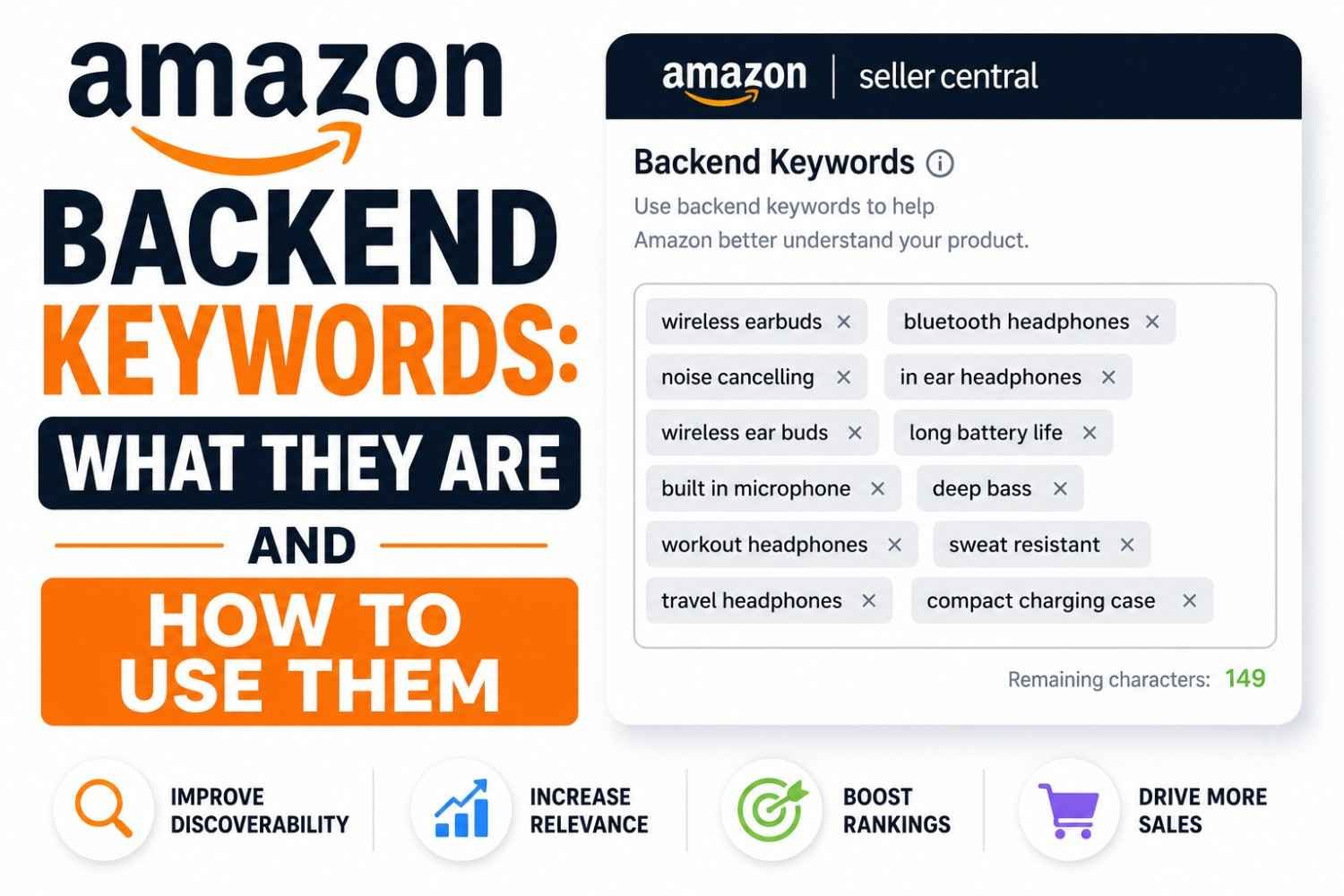
Amazon backend keywords are search terms that live behind the scenes of a listing — invisible to shoppers, but read directly by Amazon's search algorithm. Most sellers either leave this field mostly empty or fill it in a way that wastes the space entirely.
What Backend Keywords Actually Are
In Seller Central, every listing has a "Search Terms" field in the backend that isn't shown on the product page. It exists purely to catch relevant searches that don't fit naturally into your title, bullets, or description.
This gives you room to target keyword variations without cluttering the customer-facing copy with awkward, repeated phrasing.
What Belongs in the Backend Field
👉 Synonyms and alternate spellings not used in the visible listing
👉 Common misspellings buyers might search (used carefully, not excessively)
👉 Related terms that don't fit naturally into the title or bullets
Example: if your title uses "sneakers," the backend field is a good place for "trainers" or "athletic shoes" — terms some buyers search but that would feel repetitive if added to the visible copy too.
What to Leave Out
❌ Your own brand name — Amazon already indexes this automatically
❌ Competitor brand names — this violates Amazon's policies and can get a listing suppressed
❌ Keywords already used in the title or bullet points — repeating them here is wasted space
❌ Subjective claims like "best" or "amazing" — these aren't things people search for
How to Structure the Field Correctly
Amazon's backend search terms field has a character limit, and it's read differently than a typical keyword list — commas aren't necessary, and repeating words adds nothing.
✅ Use single spaces between terms, not commas
✅ Avoid repeating the same word in multiple phrases within the field
✅ Prioritize the most relevant, distinct terms first in case of space limits
Finding the Right Terms to Include
The backend field is only useful if it's filled with terms buyers are actually searching, not guesses. Running your product category through the Rankivo Keyword Research tool surfaces related terms and variations worth adding — the kind that are easy to miss when brainstorming alone.
Conclusion
amazon backend keywords are one of the easiest ranking opportunities to get wrong simply by leaving them blank or filling them with repeated, already-covered terms. Used correctly, they extend a listing's search reach without cluttering the customer-facing copy. For the full listing optimization framework, see our guide on how to optimize Amazon listings that rank.
📚 This Article Is Part of Our E-commerce Product SEO Series
Pillar: E-commerce Product SEO for Beginners: The Complete 2026 Guide
Parent article: Amazon Listing SEO: How to Optimize Listings That Rank
What Is the Amazon A9 Algorithm and How Does It Rank Listings?
Amazon Backend Keywords: What They Are and How to Use Them ← You are here
Explore the full series to go deeper on any topic.
FAQ
Can I use competitor brand names in Amazon backend keywords?
No. This violates Amazon's terms of service and can result in listing suppression. Backend keywords should be limited to generic, relevant search terms.
Do commas matter in the Amazon backend search terms field?
No, Amazon recommends separating terms with single spaces rather than commas, since commas can waste character space without adding search value.
Should I repeat my title keywords in the backend field?
No. Amazon already indexes your title, bullets, and description, so repeating those same terms in the backend field wastes space that could go toward new, uncovered search terms.
Not sure which backend keyword variations are actually worth including?
Written by
Sarah Malik
Content & Keyword Expert
Sarah blends data-driven keyword research with compelling storytelling. She helps SaaS brands build topical authority through content that ranks and converts.
Ready to create content like this?
Use RANKIVO to generate SEO-optimized content in seconds. Start free today.
Start Free — No Credit Card